


Every drop counts — and every donor makes a difference.
Blood transfusion stands as one of the most remarkable achievements in modern medicine, quietly saving millions of lives around the world each year. Behind every life saved is a true hero — the voluntary blood donor. With just one donation, a person can help up to three individuals in critical need.
Despite this incredible impact, the global supply still falls short. Around 120 million units of blood are donated annually, yet this isn’t enough to meet the ever-growing demand.
In many parts of the world, especially in low-resource settings, patients often experience dangerous delays or are unable to access safe blood when they need it most.
Whether you’re a healthcare professional, student, or someone simply eager to understand more, this blog is crafted to simplify complicated topics. You’ll explore how transfusions work and why they’re needed.
What is Blood Transfusion?
A blood transfusion is a medical procedure in which blood or its components are transferred into a patient’s bloodstream, typically through a vein in the arm. This intervention is crucial for individuals who have lost blood due to surgery, trauma, or certain medical conditions that impair blood production. The procedure is generally safe and is performed in controlled healthcare settings such as hospitals and clinics.
“The World Health Organization (WHO) reports that about 118.5 million blood donations are collected globally each year.” |
What are the Benefits of Blood Transfusion?
Blood transfusion is a critical medical procedure that can save lives by restoring the essential components of blood that the body needs to function properly. Key benefits of Blood Transfusion are:
- Restores Oxygen Supply
Red blood cells deliver oxygen to tissues and organs, supporting energy production and brain and heart function.
- Prevents or Controls Bleeding
Platelet transfusions help stop excessive bleeding, especially in patients with low platelet counts or clotting issues.
- Supports Blood Clottin
- Plasma and cryoprecipitate contain clotting factors that help prevent uncontrolled bleeding when the body cannot clot naturally.
- Stabilizes Patients During Surgery or Trauma
Transfusions are vital during surgeries or after traumatic injuries to replace lost blood and maintain blood pressure and volume.
- Supports Patients with Chronic Conditions
Blood transfusions help manage chronic conditions like anemia, thalassemia, and cancer by restoring healthy red blood cell levels. This reduces fatigue, prevents complications, and improves overall quality of life.
- Protects Against Infections
White blood cells in transfused blood help boost immunity and defend against disease.
What are the Types of Blood Transfusion?
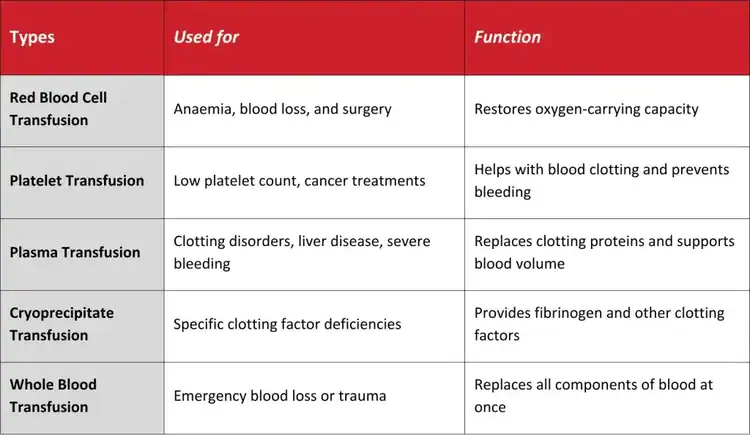
Procedure of Blood Transfusion
1. What to Expect Before a Blood Transfusion?
- Finding the Perfect Match
First, a small blood sample is taken to match your blood type with the right donor blood—this step is crucial to avoid complications.
- Double-Checking Everything
Your name, blood type, and the blood unit are carefully cross-checked. Think of it as a safety seal to make sure the right blood goes to the right person—you!
- Vital Signs Check
A quick check of your blood pressure, temperature, and pulse helps ensure you’re in the best condition to receive the transfusion.
- Transfusion Initiation
- Once cleared, the transfusion begins via a sterile needle, safe, simple, and monitored.
2. What Happens During a Blood Transfusion?
Once everything is set, it’s time for the actual transfusion. Here’s what to expect:
- Get Comfortable
You’ll be asked to sit or lie down. A nurse will insert an IV line (a small needle and tube) into a vein in your arm.
- The Transfusion Begins
The donated blood flows from a bag into your bloodstream through the IV. This process usually takes 1 to 4 hours, depending on how much blood you need.
- Monitored Every Step of the Way
A nurse will keep a close eye on you, checking your blood pressure, temperature, and heart rate at the start, 15 minutes in, and again at the end of the procedure.
- Speak Up if You Feel Unwell
Let the nurse know right away if you experience any symptoms like fever or chills, shortness of breath, itching or rash, chest or back pain, or a general feeling of uneasiness.
3. What Happens After a Blood Transfusion?
Once the transfusion is complete, here’s what you can expect:
- Wrap-Up
The nurse will carefully remove the IV line and needle. You may have a small bruise at the site—don’t worry, it’s normal and usually fades within a few days.
- Back to Normal
Most people feel fine and can return to their usual activities shortly after the procedure. Your care team may give you a little time to rest and ensure you’re feeling well before leaving.
- Stay Alert for Any Symptoms
Although rare, it’s important to watch for signs of a delayed reaction. Contact your doctor immediately if you notice chest or back pain, shortness of breath, persistent fever, or discomfort.
Myths and Facts about Blood Transfusion:
1. Myth: Donating blood weakens your body.
Fact: Your body replenishes the donated blood quickly and safely
2. Myth: Donating blood is painful and takes a long time.
Fact: It’s quick (under an hour) and involves only mild discomfort.
3. Myth: Older adults can’t donate blood.
Fact: Healthy individuals can donate regardless of age, even over 70
4. Myth: Blood transfusions spread infections like HIV
Fact: All donated blood is thoroughly tested, making transfusions very safe.
This is where the concept of Meta-Leadership, developed by Harvard’s School of Public Health and Kennedy School of Government, becomes especially relevant. It outlines five key dimensions critical for leading effectively under pressure:
Conclusion
Blood transfusion is not just a procedure—it’s a lifeline. From saving mothers during childbirth to stabilizing trauma victims and supporting chronic illness patients, the impact of a single unit of blood can be profound. Yet, many still lack access to safe, timely transfusions due to limited awareness and training in clinical settings.
If you’re a healthcare professional or student looking to enhance your understanding and competence in this critical area, our Blood Transfusion Course at Meducination is designed for you. You’ll gain:
- In-depth understanding of transfusion types and procedures
- Hands-on knowledge of donor screening, crossmatching, and storage
- Clear protocols for emergency and routine transfusions
- Insights into complications and how to manage them safely
- Certification upon completion to enhance your medical credentials
Take the next step in your medical journey—enroll today and be the reason someone lives to see tomorrow.
Because when it comes to saving lives, knowledge isn’t optional—it’s vital.
Combining real-time experience with thoughtfully designed training programs is key to building resilient, adaptable, and visionary emergency physicians who can lead from the front—both in the chaos of the resus bay and in shaping the future of emergency care.
Ready to go beyond reading?
Enroll in our Blood Transfusion Course and turn knowledge into life-saving action.
FAQ
Risks are minimal but can include allergic reactions, fever, or, in very rare cases, infections. Strict screening and matching procedures are in place to minimize these risks.
A typical blood transfusion takes between 1 to 4 hours, depending on the amount and type of blood product being given (red cells, platelets, plasma).
You’ll be monitored for any immediate reactions, like fever or rash. Most people feel better quickly, especially if the transfusion treats anemia or blood loss.
A needle is placed in your vein, and the blood flows from a bag through a tube into your bloodstream. You’ll be monitored throughout.
Your blood type (A, B, AB, O, and Rh factor) is tested to ensure compatibility. A “crossmatch” test is done to avoid reactions.